


Most british homeowners upgrading luxury interiors now seek materials that are both sustainable and striking. With over 80% of modern renovations in South England favouring low-maintenance finishes, microcement furniture has quickly become a top choice for stylish living spaces. This article uncovers what sets furniture microcement apart, from its impressive durability to customisable design potential, guiding you toward a seamless blend of sophistication and practicality for your home.
Table of Contents
- What Is Furniture Microcement? Core Principles
- Types and Styles of Microcement Furniture
- Key Properties for Luxury Living Spaces
- Application Process and Customisation Options
- Risks, Costs, and Maintenance Essentials
Key Takeaways
| Point | Details |
|---|---|
| Innovative Material | Furniture microcement offers a modern, seamless surface treatment that enhances both functionality and aesthetics in contemporary homes. |
| Versatile Design Options | Available in a variety of styles and colours, microcement allows for exceptional customisation to suit individual tastes and interior designs. |
| Durability and Low Maintenance | With its resistance to wear and staining, microcement is ideal for busy households and requires minimal upkeep. |
| Professional Application Essential | Proper application is crucial for achieving optimal results, with professional installation recommended to ensure quality and longevity. |
What Is Furniture Microcement? Core Principles
Furniture microcement represents an innovative surface treatment technology revolutionising interior design solutions for contemporary homes. This advanced cementitious coating offers homeowners in South England an exceptional material for creating seamless, stylish, and highly functional furniture surfaces. Microcement is a sophisticated material comprising cement, fine aggregates, polymers, water-based resins, and specialised pigments designed to transform ordinary furniture into extraordinary design statements.
The core principles of furniture microcement centre on its remarkable technical capabilities. Unlike traditional surface treatments, microcement provides exceptional adhesion to multiple substrate materials, enabling designers and homeowners to reimagine furniture aesthetics without structural limitations. Its key characteristics include remarkable durability, waterproof properties, and a sleek, contemporary appearance that integrates seamlessly with modern interior design philosophies. The material’s ultra-fine particle structure (typically under 100 micrometres) allows for incredibly thin, lightweight applications that maintain structural integrity and visual appeal.
Practical applications of furniture microcement span multiple design contexts, from kitchen worktops and bathroom vanities to statement coffee tables and bespoke shelving units. Homeowners can select from an extensive palette of colours and textures, allowing for truly personalised design solutions that reflect individual aesthetic preferences. The material’s low-maintenance nature and resistance to staining make it particularly attractive for busy households seeking both style and practicality.
Pro tip: When selecting furniture microcement, always request material samples to assess colour variations and test compatibility with your specific interior design scheme.
Types and Styles of Microcement Furniture
Microcement furniture offers an extraordinary range of design possibilities for contemporary interiors, blending cutting-edge materials science with aesthetic versatility. Homeowners can explore multiple styles that transform traditional furniture concepts, from minimalist kitchen countertops to sculptural living room centrepieces. Transformative design approaches enable creative applications across residential spaces, allowing unprecedented customisation of furniture surfaces.
The primary styles of microcement furniture can be categorised into distinct aesthetic families. Contemporary minimalist designs emphasise clean lines and monochromatic colour palettes, featuring sleek surfaces with smooth, seamless transitions. Industrial chic styles incorporate raw, textured microcement finishes that highlight the material’s inherent structural qualities, often combining neutral greys with metallic accents. Organic modern approaches leverage microcement’s malleable nature to create furniture with soft, curved forms that mimic natural landscapes, integrating earthy tones and subtle textural variations.
Furniture types amenable to microcement treatments span an impressive spectrum. Kitchen worktops, bathroom vanities, dining tables, coffee tables, shelving units, and decorative side tables can all be transformed using this versatile material. The ability to create custom colours and textures means each piece can be precisely tailored to complement existing interior design schemes, offering homeowners unprecedented personalisation options. Microcement’s lightweight nature and exceptional durability make it particularly suitable for both statement furniture pieces and functional surface treatments.

Here’s a summary of key microcement furniture styles and their defining features:
| Style | Typical Surface Finish | Colour Palette | Best Suitability |
|---|---|---|---|
| Contemporary Minimalist | Smooth and seamless | Monochrome, neutral | Modern kitchens, studios |
| Industrial Chic | Raw, textured, matte | Greys, metallics | Urban lofts, dining rooms |
| Organic Modern | Soft, curved, tactile | Earth tones, muted | Nature-inspired living areas |
Pro tip: Consider requesting colour samples and testing microcement finishes under different lighting conditions to ensure the perfect match for your interior design vision.
Key Properties for Luxury Living Spaces
Microcement furniture represents the pinnacle of modern design innovation, offering a suite of exceptional properties that elevate luxury living spaces beyond conventional interior design solutions. Discerning homeowners seeking sophisticated, high-performance surface treatments will find microcement an unparalleled material choice. Advanced design solutions enable transformative approaches to residential interiors, combining aesthetic elegance with remarkable technical performance.
The key properties that distinguish microcement as a premier material for luxury living spaces encompass several critical dimensions. Durability stands at the forefront, with microcement offering exceptional resistance to wear, scratching, and environmental stressors. Its impermeability ensures surfaces remain pristine, preventing moisture absorption and maintaining structural integrity in high-humidity environments like kitchens and bathrooms. The material’s thermal stability allows for consistent performance across temperature variations, making it ideal for underfloor heating systems and spaces with significant environmental fluctuations.
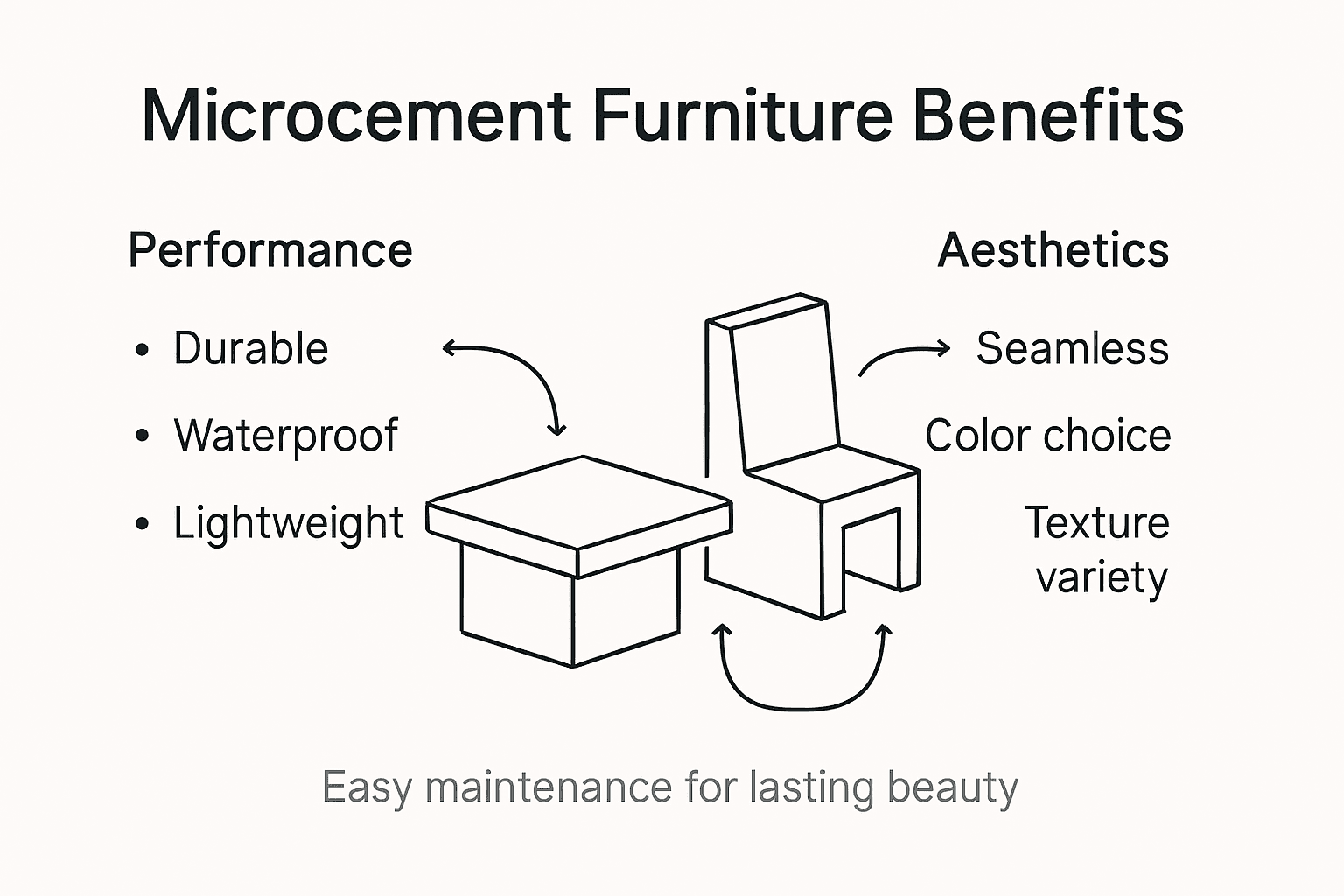
Beyond technical performance, microcement delivers unparalleled aesthetic versatility. Homeowners can select from an extensive palette of colours, textures, and finishes that seamlessly integrate with contemporary design schemes. The material’s ability to create seamless, jointless surfaces eliminates traditional design limitations, allowing for fluid, continuous design expressions that enhance spatial perception and create a sense of expansiveness. Its lightweight nature combined with exceptional strength makes it suitable for complex architectural interventions, from elegant kitchen worktops to intricate decorative elements that serve as focal points in luxury living spaces.
Pro tip: Consult with professional microcement specialists to understand the full range of colour and texture options that can be customised to match your specific interior design vision.
Application Process and Customisation Options
Microcement application represents a sophisticated process requiring precision, expertise, and meticulous preparation to achieve exceptional interior design outcomes. Professional application involves multiple intricate stages that transform ordinary surfaces into extraordinary design statements. Tailored design solutions enable homeowners to create truly personalised interior environments that reflect individual aesthetic preferences and functional requirements.
The application process encompasses several critical stages. Surface preparation is paramount, involving comprehensive cleaning, smoothing, and potentially priming existing surfaces to ensure optimal microcement adhesion. Skilled technicians carefully assess substrate conditions, addressing any structural imperfections or irregularities before application. The base coat establishes a foundational layer, creating a stable platform for subsequent microcement treatments. Subsequent layers are applied using specialised trowelling techniques that ensure uniform thickness, smooth transitions, and exceptional surface integrity. Professional applicators typically apply two to three microcement layers, each meticulously smoothed and integrated to create a seamless, continuous finish.
Customisation options for microcement furniture and surfaces represent a virtually limitless design palette. Homeowners can select from an extensive range of colour variations, including subtle earth tones, dramatic monochromatic schemes, and nuanced metallic finishes. Texture variations allow for everything from ultra-smooth, glossy surfaces to more tactile, slightly rough finishes that add depth and visual interest. Advanced pigmentation techniques enable precise colour matching, ensuring microcement elements perfectly complement existing interior design schemes. The material’s inherent flexibility allows for complex design interventions, from creating seamless worktops to developing intricate decorative elements that serve as focal points in luxury living spaces.
Pro tip: Always request comprehensive colour and texture samples, and observe them under different lighting conditions to ensure the perfect match for your specific interior design vision.
Risks, Costs, and Maintenance Essentials
Navigating the landscape of microcement furniture requires a comprehensive understanding of potential risks, financial considerations, and long-term maintenance strategies. Homeowners contemplating this sophisticated surface treatment must carefully evaluate multiple factors to ensure optimal performance and value. Comprehensive design investment solutions enable informed decision-making throughout the selection and implementation process.
Financial considerations represent a critical aspect of microcement furniture adoption. Initial costs can range significantly, typically between £150 to £350 per square metre, depending on complexity, surface preparation requirements, and design intricacy. Professional installation is recommended, with skilled technicians charging premium rates reflecting their expertise. Potential hidden costs include substrate preparation, potential structural reinforcement, and precise colour matching. Homeowners should budget approximately 20% above initial quotes to accommodate unexpected technical challenges. Comparative analysis with alternative surface treatments demonstrates that while microcement represents a higher upfront investment, its durability and aesthetic longevity can provide exceptional long-term value.
This reference table clarifies the main cost factors and long-term value of microcement furniture:
| Cost Factor | Typical Range | Long-Term Value | Financial Consideration |
|---|---|---|---|
| Initial Installation | £150–£350 per sq metre | Durable, long-lasting | Budget 20% for extras |
| Maintenance | Annual sealing advised | Preserves appearance | Low recurring costs |
| Repair/Replacement | Specialist required | Maintains integrity | Plan for professional fees |
Maintenance requirements for microcement furniture are relatively straightforward but demand consistent, careful attention. Routine maintenance involves gentle cleaning using pH-neutral cleaning agents, avoiding abrasive materials that might compromise the surface integrity. Periodic professional sealing every three to five years helps maintain the material’s water-resistant properties and aesthetic appeal. Potential risks include surface microcracking under extreme temperature fluctuations, potential colour fading with prolonged direct sunlight exposure, and the need for professional repair if significant structural damage occurs. Homeowners must also be aware of potential staining risks in high-traffic areas, particularly with lighter colour variations that may show wear more prominently.
Pro tip: Request a comprehensive maintenance guide from your microcement specialist and schedule annual professional inspections to preserve your surface’s pristine appearance and structural integrity.
Elevate Your Interiors with Expert Furniture Microcement Solutions
Transforming your home with furniture microcement means overcoming challenges like finding durable, waterproof surfaces that also deliver seamless style and personalisation. Key concerns include ensuring perfect colour matching, long-lasting finish integrity, and flawless application to create sleek, contemporary furniture pieces that suit your unique design vision. At KT Construction, we understand these goals and provide artisanal craftsmanship combined with over 20 years of expertise in microcement applications tailored for luxury living spaces across the South of England.
Our approach addresses the critical aspects highlighted in the article such as exceptional adhesion, a wide palette of colours and textures, and the need for low-maintenance yet stunning surfaces. Whether you want to revitalise kitchen worktops, design bespoke shelving, or create seamless bathroom vanities, our eco-friendly materials and customised finishes bring your ideas to life with precision and care.
Discover how our expert microcement services can transform your furniture surfaces with lasting elegance.
Ready to redefine your interiors with flawless furniture microcement? Visit KT Construction today to explore our tailored solutions and arrange a consultation. Secure your place for bespoke, durable, and stylish surfaces crafted to elevate your home now.
Frequently Asked Questions
What is furniture microcement?
Furniture microcement is an advanced cementitious coating that offers seamless and stylish surfaces for furniture. It is made up of cement, fine aggregates, polymers, water-based resins, and specialised pigments, allowing for high durability and aesthetic appeal.
How is microcement applied to furniture surfaces?
The application process involves several stages, including surface preparation, applying a base coat, and multiple microcement layers using specialised trowelling techniques. Each layer is meticulously smoothed to create a seamless finish.
What are the benefits of microcement furniture compared to traditional materials?
Microcement offers exceptional durability, waterproof properties, and aesthetic versatility. Its lightweight nature allows for intricate designs while providing resistance to wear and scratching, making it ideal for high-functioning surfaces in busy households.
How can I maintain my microcement furniture to ensure its longevity?
Routine maintenance involves gentle cleaning with pH-neutral cleaners and avoiding abrasive materials. It is recommended to seal the surface every three to five years to preserve its water-resistant properties and overall aesthetic appeal.
