


Stepping into a freshly renovated space, you immediately sense whether it feels modern, cosy, or simply built to last. For homeowners across Southern England, the quest for the perfect, eco-friendly surface finish goes beyond style, touching on comfort, daily upkeep, and long-term value. Choosing the right finish means balancing beautiful aesthetics with durability and sustainability, ensuring your interiors feel just right and stand the test of time. Surface finishes are the materials applied to walls, floors, and ceilings that define how your space feels, functions, and performs every day.
Table of Contents
- Defining Surface Finishes In Interior Design
- Major Types Of Interior Surface Treatments
- Performance, Durability, And Sustainability Factors
- Impact On Style, Maintenance, And Wellbeing
- Choosing The Right Finish For Each Space
Key Takeaways
| Point | Details |
|---|---|
| Surface finishes shape spatial identity | They define the character, functionality, and atmosphere of a space, influencing both aesthetics and practical performance. |
| Choose finishes based on room demands | Understand the specific needs of each space to select finishes that excel in those conditions, such as moisture resistance in bathrooms or durability in hallways. |
| Integrate finishes for cohesion | Consider how various finishes work together to create a harmonious look rather than selecting finishes in isolation. |
| Evaluate performance and sustainability | Prioritise durability and eco-credentials alongside aesthetics to ensure your choices deliver long-term value and reduce environmental impact. |
Defining Surface Finishes in Interior Design
When you walk into a room, you don’t just notice the furniture or the layout. You notice how things feel, how light bounces off surfaces, and whether the space feels hard and clinical or warm and inviting. That’s the work of surface finishes. At their core, surface finishes are the materials applied to walls, floors, ceilings, and other surfaces within a space to create both the visual character and the practical functionality that defines how a room performs and feels.
Think of surface finishes as the skin of your interior. They’re not just cosmetic. Interior surface finishes define the character, functionality and atmosphere of a space, shaping spatial identity through style whilst supporting functional needs like durability, acoustic comfort, and ease of maintenance. When you’re considering a kitchen renovation in Sussex or updating a bathroom in a Victorian cottage near Brighton, the finish you choose will determine not only whether your surfaces survive spills and moisture but also how the entire room looks and sounds. A painted drywall ceiling absorbs sound differently than a plasterboard finish. Polished microcement on a floor reflects light and feels completely different underfoot than raw concrete or carpet.
The range of surface finishes available today is far broader than most homeowners realise. Interior finishes include wall finishes like paint and wood paneling, ceiling finishes such as acoustic tiles, floor finishes including hardwood and tile, and trim finishes like baseboards. But that’s just the conventional list. Modern options have expanded significantly. Microcement creates seamless, minimalist surfaces on floors and walls with an industrial aesthetic that’s become increasingly popular in contemporary Southern English homes. Clay paint offers breathability and natural colour variation for those seeking eco-friendly alternatives. Liquid stone provides a luxurious, polished appearance without the cost or weight of natural marble. Textured wall coverings add depth and visual interest where flat paint might feel too simple. For homeowners balancing aesthetics with sustainability, these artisanal finishes deliver on both fronts. The key is understanding which finishes serve your specific needs, whether that’s moisture resistance in a bathroom, durability in a high-traffic hallway, or acoustic improvement in an open-plan living area.
What often gets overlooked is how surface finishes work together. A space isn’t defined by a single finish but by how all the surfaces interact. Matte wall finishes paired with glossy floor surfaces create visual interest and define zones within an open-plan layout. A textured ceiling can balance smooth, polished flooring. Light-absorbing finishes in one area contrast with reflective surfaces elsewhere to guide the eye and shape how you move through the space. When you’re planning a renovation, thinking about finishes individually rather than collectively often leads to disappointing results. The most successful interiors treat surface finishes as an integrated system where each element complements the others, creating cohesion rather than visual chaos.
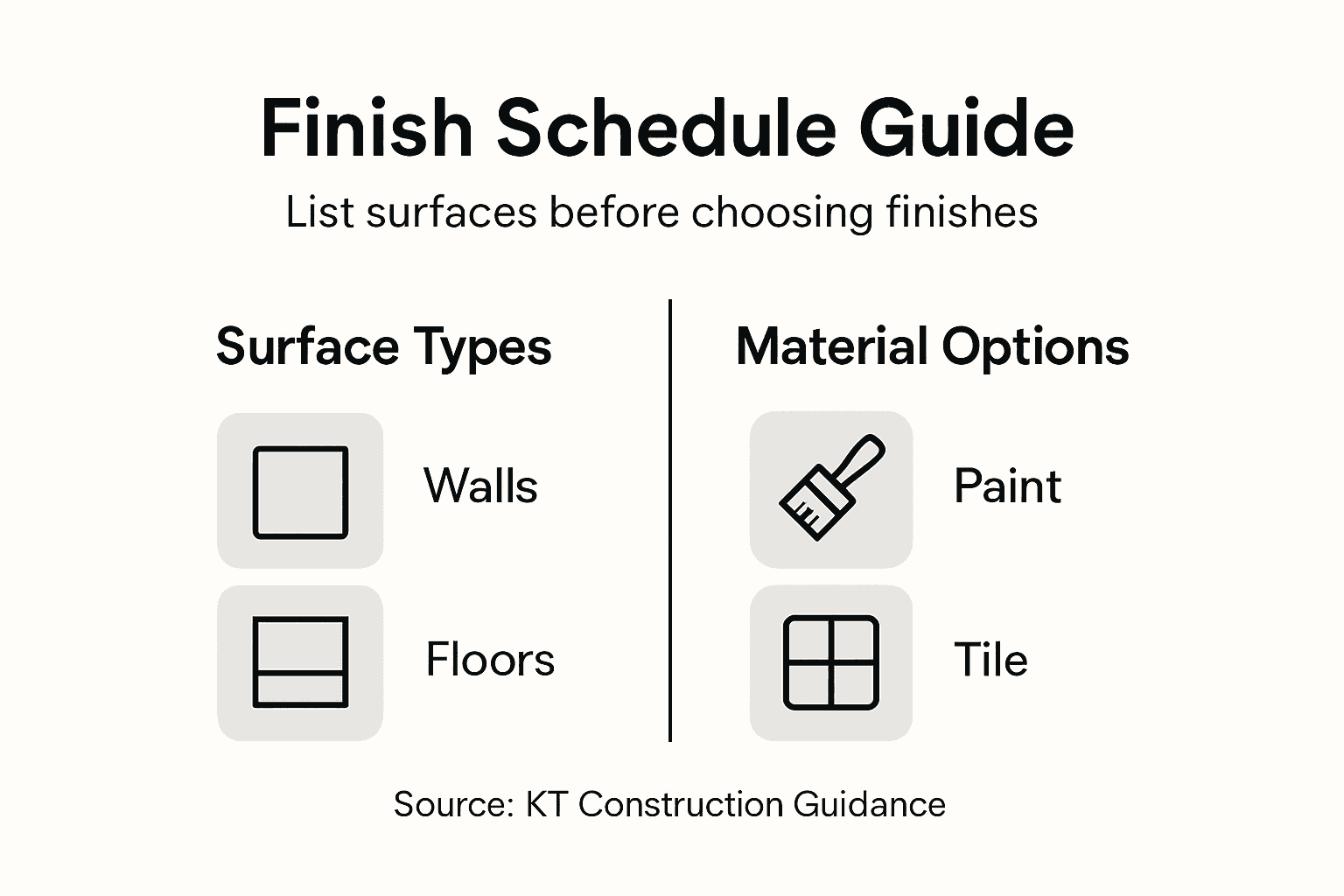
Pro tip: Create a finish schedule before committing to any materials by listing every surface in the room (walls, floors, ceiling, trim) and noting which finish will be applied to each, ensuring your choices work together harmoniously rather than competing for attention.
Major Types of Interior Surface Treatments
When you’re standing in a showroom or flipping through design inspiration, you’ll hear terms like microcement, clay paint, and liquid stone thrown around. But what actually makes these different from traditional paint or wallpaper? The answer lies in understanding the distinct characteristics and applications of each surface treatment type. Different finishes excel in different situations, and choosing the right one depends on your specific needs, the room’s purpose, and your design vision.
The most common interior surface treatments fall into several broad categories. Natural stone finishes like marble and granite bring timeless elegance and durability, though they require proper sealing and maintenance in moisture-prone areas. Wood and veneer cladding adds warmth and character, particularly valued in Southern English period properties where it complements period features. Ceramic and porcelain finishes are workhorses in kitchens and bathrooms because they resist moisture, staining, and wear from daily use. Wallpaper and textiles offer an accessible way to introduce pattern and texture without the permanence of paint. Concrete and microcement finishes deliver that coveted industrial-modern aesthetic whilst providing seamless, durable surfaces that work on floors, walls, and even furniture. Metal cladding appears primarily in luxury contemporary settings, adding reflective surfaces and visual drama. Each category serves specific functional requirements whilst contributing to your overall aesthetic vision.

What makes surface treatments genuinely transformative is their ability to address real-world challenges. Consider moisture resistance. In a South Coast bathroom or a kitchen prone to steam, ceramic and porcelain surfaces suited for wet and high-traffic areas outperform paint alone. Microcement similarly excels in bathrooms because it creates a waterproof, seamless finish without grout lines where mould can hide. For living spaces in period properties, wood cladding and quality clay paint protect whilst breathing, preventing damp issues that plague older buildings. Industrial properties or modern lofts benefit from exposed concrete treatments that echo the building’s character. The reality is this: your finish choice must work hard for you, not just look attractive. A beautiful wallpaper in a children’s playroom won’t withstand the wear and tear that a durable microcement or specialised paint system will handle. Surface treatments enhance durability and sustainability by protecting underlying substrates from environmental degradation, which is precisely why understanding the technical performance of different options matters alongside their visual appeal.
For homeowners balancing aesthetics with eco-credentials, the modern finish landscape offers genuine alternatives to conventional options. Clay paint provides breathability and natural colour variation without the synthetic chemicals in standard emulsions. Liquid stone creates a luxurious marble-like appearance using sustainable materials, eliminating the cost and environmental impact of quarrying natural stone. Textured wall coverings and artisanal finishes allow you to introduce personality without committing to permanent changes. The most successful renovations in the South of England we’ve observed treat these options as genuine solutions rather than premium add-ons. When you understand what each finish actually does and what environments suit it best, you can make decisions based on performance and longevity, not just the glossy magazine image.
To help distinguish between major surface treatments, here is a comparison highlighting their primary benefits and challenges:
| Surface Treatment | Key Strength | Main Limitation | Best Use Location |
|---|---|---|---|
| Microcement | Waterproof, seamless | Needs skilled installation | Kitchens, bathrooms |
| Clay paint | Breathable, eco-friendly | Less abrasion resistance | Living rooms, bedrooms |
| Natural stone | Elegant, durable | Requires regular sealing | Hallways, luxury kitchens |
| Porcelain/ceramic | Moisture resistant | Cold underfoot | Bathrooms, utility areas |
| Timber cladding | Warmth, character | Sensitive to moisture | Living rooms, bedrooms |
| Wallpaper/textiles | Pattern, flexibility | Can be tricky to clean | Feature walls, bedrooms |
| Metal cladding | Reflects light, dramatic look | Prone to scratching | Contemporary spaces |
Pro tip: Create a comparison chart listing each room’s specific demands—moisture exposure, foot traffic, light levels, cleaning frequency—then match these requirements against finish characteristics before making selections, ensuring your choices perform brilliantly for years rather than disappointing you within months.
Performance, Durability, and Sustainability Factors
Choosing a surface finish based purely on appearance is a bit like buying a car because you like the colour. You’ll regret it within months when reality sets in. The true measure of a good finish lies in how it performs over time, how long it lasts before needing replacement, and what environmental cost you’re paying for that choice. For homeowners in the South of England investing significant money into renovations, understanding performance, durability, and sustainability isn’t optional—it’s essential to getting real value from your investment.
Performance begins with understanding what your specific surfaces must endure. A kitchen finish faces steam, splashes, grease, and constant cleaning. A bathroom finish battles moisture and humidity for decades. A hallway finish handles daily foot traffic from families and pets. A living room finish might simply need to resist fading from sunlight and the occasional spill. This is why microcement has become increasingly popular in high-demand areas—it performs brilliantly in wet environments without grout lines where mould breeds, it withstands heavy traffic without showing wear patterns, and it cleans easily without harsh chemicals damaging the surface. Clay paint performs differently. It excels in living spaces where breathability prevents condensation and musty odours, particularly valuable in older Southern English properties prone to dampness. Ceramic and porcelain perform best where moisture and durability matter most. The critical mistake homeowners make is selecting finishes based on a single property—looks, cost, or trend—rather than matching finish performance to actual room demands.
Durability and sustainability are increasingly inseparable concepts. A cheap finish that needs replacing every five years creates far more waste and environmental impact than a quality finish lasting twenty years. Sustainable interior design emphasises materials offering long-term use, easy maintenance, and durability to minimise environmental impact, which means paying more upfront for a finish that lasts is genuinely the sustainable choice. Microcement exemplifies this perfectly. It bonds seamlessly to existing surfaces, creating a waterproof barrier that doesn’t degrade like paint or suffer grout deterioration like traditional tiles. Clay paint is another excellent example—it’s made from natural, non-toxic materials that biodegrade safely at end-of-life, yet lasts for decades in appropriate conditions. Liquid stone provides the luxury appearance of natural marble without the environmental burden of quarrying, extraction, and transportation across continents. When you evaluate durability, consider maintenance requirements too. A natural stone finish demands regular sealing and specialist cleaning. A microcement finish cleans with basic soap and water. Over twenty years, the maintenance costs and environmental impact of your finish choice compound significantly.
What often gets overlooked is how your finish choice affects the broader building performance. Sustainability in interior architecture involves evaluating energy efficiency, water efficiency, material sustainability, carbon footprint, and social return on investment through durable materials. A light-coloured, reflective finish reduces artificial lighting needs in a room, lowering energy consumption. A breathable finish like clay paint improves indoor air quality and reduces the need for mechanical ventilation. A seamless microcement finish eliminates moisture traps, reducing mould growth and associated health issues. These aren’t minor benefits—they’re genuine contributions to occupant wellbeing and environmental responsibility. The most successful renovations we’ve observed in contemporary Southern English homes treat surface finishes as integrated systems where aesthetics, performance, durability, and environmental impact work together rather than competing against each other. You’re not choosing between beauty and sustainability, or between cost and longevity. You’re selecting finishes that deliver on all fronts when you make informed decisions.
Here’s a practical breakdown of what to evaluate before committing:
- Environmental impact: Manufacturing process, transportation distance, recyclability, toxicity at end-of-life, carbon footprint
- Durability: Expected lifespan in your specific application, resistance to your room’s particular stresses
- Maintenance: What’s required to keep it looking good, cost and environmental impact of cleaning products, frequency of maintenance
- Performance: Moisture resistance, traffic durability, cleanability, light reflection, acoustic properties, breathability
- Cost: Both initial installation and lifetime maintenance, replacement frequency, long-term value
Pro tip: Request durability and performance data from your finish supplier specific to your room type and usage pattern rather than relying on general specifications, then calculate the true cost per year of ownership including maintenance, replacement frequency, and environmental impact to make decisions based on genuine long-term value.
Impact on Style, Maintenance, and Wellbeing
Your surfaces do far more than look attractive. They shape how you feel when you walk into a room, how easy your life becomes when maintaining that space, and ultimately how the environment supports or undermines your physical and mental wellbeing. A finish that photographs beautifully but demands three hours of specialist cleaning monthly will exhaust you long before it stops looking good. Conversely, a thoughtfully chosen finish that feels right, cleans easily, and actively improves air quality becomes genuinely invisible—it simply works, day after day, year after year.
The visual and tactile experience of surfaces profoundly affects how we perceive and inhabit spaces. Surface textures and material finishes significantly influence user experience by engaging tactile and visual senses, with materials like wood and stone evoking warmth whilst metals and glass feel sleek. This is why microcement has become so popular in contemporary Southern English homes. Beyond its technical performance, the tactile experience matters. Running your hand across a polished microcement floor feels cool, smooth, and modern. Touching a clay-painted wall feels organic and slightly textured. These sensory experiences accumulate throughout your day, subtly influencing mood and comfort. A cold, hard, reflective finish in a bedroom creates tension. A warm, slightly textured finish promotes relaxation. The style you choose isn’t purely aesthetic. It’s about creating an environment where your nervous system feels at ease.
Maintenance represents the reality of living with your chosen finish. A beautiful natural stone floor in a busy family kitchen becomes a source of frustration if it requires sealing, specialist cleaning, and constant vigilance against staining. A microcement finish in the same kitchen cleans with warm soapy water, resists staining naturally, and improves with age as minor marks create character rather than appearing like damage. Clay paint on living room walls requires gentle care and avoids harsh chemicals, which many homeowners find refreshing. Wallpaper demands careful dusting and sometimes specialist removal. The point is simple: if you hate maintaining something, you’ll grow to resent it, regardless of how attractive it initially appeared. When selecting finishes, be brutally honest about your actual lifestyle. Do you have young children and pets? High-traffic areas demand durable, easy-clean finishes like microcement or sealed concrete. Do you value natural materials and minimal processing? Clay paint and timber cladding require more thoughtful maintenance but reward you with healthier, more breathable surfaces. Do you change your aesthetic frequently? Wallpaper and removable textiles offer flexibility without permanent commitment. The maintenance rhythm you choose becomes part of your daily life.
Perhaps most overlooked is how surface finishes directly affect occupant wellbeing. Surface materials play a critical role in shaping spatial ambiance and wellness, impacting acoustics, lighting, air quality, and mental health through thoughtful material choice. A breathable clay paint finish actively improves indoor air quality, reducing dust, allergens, and that stale feeling common in traditionally painted homes. A seamless microcement finish eliminates mould-harbouring grout lines, benefiting anyone with respiratory sensitivities. Light-coloured, reflective finishes reduce the need for artificial lighting, lowering eye strain during daylight hours. Textured finishes absorb sound, creating acoustically calmer environments crucial in open-plan homes. Natural wood and stone surfaces evoke biophilic responses—our brains recognise natural materials and respond with lower stress levels. In contrast, highly synthetic, ultra-glossy finishes in living spaces can feel clinical and uncomfortable for extended periods. The most successful renovations we’ve observed treat surface selection as a wellness decision alongside an aesthetic one. You’re not simply choosing what looks good in a photograph. You’re creating an environment where you and your family thrive.
Consider these practical impacts before finalising your choices:
- Daily cleaning: Time required, products needed, physical demand, frequency
- Sensory experience: How does it feel to touch? Does it appeal emotionally or feel impersonal?
- Air quality: Does it off-gas or emit chemicals? Does it breathe and regulate humidity?
- Acoustic performance: Does the space feel peaceful or hard and echo-y?
- Visual impact on mood: Does the finish energise, calm, or feel neutral?
- Adaptability: Can you modify or change this finish if your tastes or needs evolve?
Pro tip: Visit completed projects and spend time in spaces featuring your shortlisted finishes, noticing not just how they look but how they feel underfoot, how easy they appear to maintain, and what emotional response they trigger, then imagine living with that sensation every single day before making your final choice.
Choosing the Right Finish for Each Space
Every room in your home has a different job. A kitchen floor absorbs spills, footsteps, and the chaos of family life. A bedroom wall should whisper calm and comfort. A bathroom finish battles moisture constantly. A hallway endures traffic and dirt from outside. Applying the same finish throughout your home is like wearing the same outfit in every season—technically possible, but practically foolish. The most successful renovations treat each space as a distinct environment with its own demands, then select finishes that excel in those specific conditions.
Start by identifying what each space actually needs to accomplish. Selecting the right interior finish depends on understanding the space’s function, desired aesthetic, and maintenance needs, with paint offering versatile, cost-effective options in finishes like matte, satin, and gloss suited to different rooms. A kitchen demands moisture resistance, stain resistance, and easy cleanability above all else. Microcement excels here because it’s waterproof, seamless, and cleans with basic soap. A living room prioritises acoustics and warmth. Textured finishes and clay paint absorb sound and feel inviting. A bedroom values tranquillity and air quality. Breathable, natural finishes like timber cladding or clay paint create that sanctuary feeling. A bathroom must prevent mould and resist constant humidity. Microcement without grout lines, ceramic tiles, or well-sealed surfaces handle moisture brilliantly. A hallway faces heavy traffic and dirt. Durable, stain-resistant finishes like polished concrete or sealed microcement withstand the wear. A home office benefits from finishes that reduce visual fatigue and reflect light evenly. The point is this: there is no universal best finish. There are only best finishes for specific situations.
Once you understand what each space needs, apply this straightforward decision process:
- List the space’s challenges: Moisture exposure, foot traffic volume, cleaning frequency, light levels, noise issues, temperature fluctuations
- Identify aesthetic preferences: Colour palette, texture, contemporary or period style, reflective or matte appearance
- Consider maintenance reality: How often will you clean this? What products can you use? Do you want to hire specialists or handle it yourself?
- Cross-reference finish performance: Does your shortlist of finishes actually handle the challenges you listed?
- Evaluate lifespan and cost: Initial cost plus maintenance and replacement frequency over twenty years
- Test before committing: Request samples or visit completed projects featuring your preferred finishes
In kitchens, microcement creates seamless work surfaces and stunning floor finishes that resist staining and clean effortlessly. In bathrooms, microcement similarly excels alongside high-quality ceramic and porcelain. In living rooms and bedrooms, clay paint and natural timber finishes create warmth whilst improving air quality. In hallways facing heavy traffic, durable microcement, sealed concrete, or porcelain tile perform exceptionally. What’s crucial is matching finish performance to room reality rather than choosing based on magazine aesthetics alone. A beautiful white marble kitchen floor will drive you to distraction within months if you have young children and pets. A durable, easy-clean microcement floor in a warm grey will bring you satisfaction for decades.
Here is a summary of which finishes suit the specific challenges of different spaces:
| Room | Core Challenge | Recommended Finish | Major Benefit |
|---|---|---|---|
| Kitchen | Moisture, stains, cleaning | Microcement or porcelain tile | Resists water and stains |
| Bathroom | Humidity, mould risk | Microcement, ceramic tile | Prevents mould and water damage |
| Living room | Warmth, acoustics | Clay paint, timber cladding | Improves comfort, air quality |
| Bedroom | Relaxation, air quality | Clay paint, wallpaper | Promotes sleep and wellbeing |
| Hallway | Foot traffic, dirt | Polished concrete, porcelain | Withstands wear and stains |
| Home office | Light, visual fatigue | Matte paint, clay paint | Reduces strain and glare |
The room-by-room approach also prevents the visual chaos of mismatched finishes competing for attention. When you select finishes deliberately for each space, transitions between rooms feel intentional rather than haphazard. Moving from a matte clay-painted living room into a polished microcement kitchen hallway creates a subtle shift that guides you psychologically. Each space feels distinct yet coherent. The overall renovation reads as a thoughtful system rather than a collection of individual choices.
Pro tip: Create a room-by-room finish schedule listing each space, its primary challenges, your finish choice, and the reasoning behind that choice, then share this with your finish specialist so you’re aligned on expectations before application begins rather than discovering mismatches halfway through your project.
Elevate Your Interiors with Expert Surface Finishes from KT Construction
Choosing the right surface finish can transform your space not just in appearance but in functionality, durability, and wellbeing. Whether you face challenges like moisture in bathrooms, heavy traffic in hallways, or want a seamless, easy-to-maintain kitchen that also expresses your style, KT Construction specialises in delivering bespoke surface solutions tailored to your needs. Our expertise in microcement applications creates stunning finishes that are waterproof, durable, and fully customisable in colours and textures. Beyond microcement, we also offer artisanal finishes like clay paint and liquid stone that bring eco-friendly, breathable, and elegant surfaces that enhance air quality and comfort.
Don’t settle for finishes that wear out or disappoint your lifestyle. Discover how our 20 years of craftsmanship combined with modern, sustainable materials can give your home or commercial space surfaces that perform brilliantly while elevating style. Visit our website KT Construction today to explore our range of decorative surface finishes and find out how we can help you create interiors where every surface works perfectly together for long-lasting beauty and wellbeing. Contact us now and take the first step towards a truly transformative renovation.
Frequently Asked Questions
What are surface finishes in interior design?
Surface finishes are materials applied to walls, floors, ceilings, and other surfaces to enhance both the visual character and functionality of a space. They play a crucial role in how a room looks, feels, and performs.
How do I choose the right surface finish for my space?
Selecting the right surface finish depends on several factors, including the room’s purpose, aesthetic preferences, maintenance needs, and performance requirements, such as moisture resistance or durability. Consider the specific challenges each space presents before making a choice.
What are the key differences between microcement and traditional tile finishes?
Microcement offers a seamless, waterproof finish that is durable and easier to clean compared to traditional tiles, which may have grout lines prone to mould. Additionally, microcement delivers a contemporary aesthetic, while tiles can provide various textures and patterns.
How do surface finishes impact indoor air quality and wellbeing?
Certain surface finishes, like clay paint, enhance indoor air quality by being breathable and reducing allergens. Meanwhile, finishes lacking in breathability can contribute to moisture problems and poor air circulation. Thoughtful selection can significantly improve the comfort and health of interior environments.
