
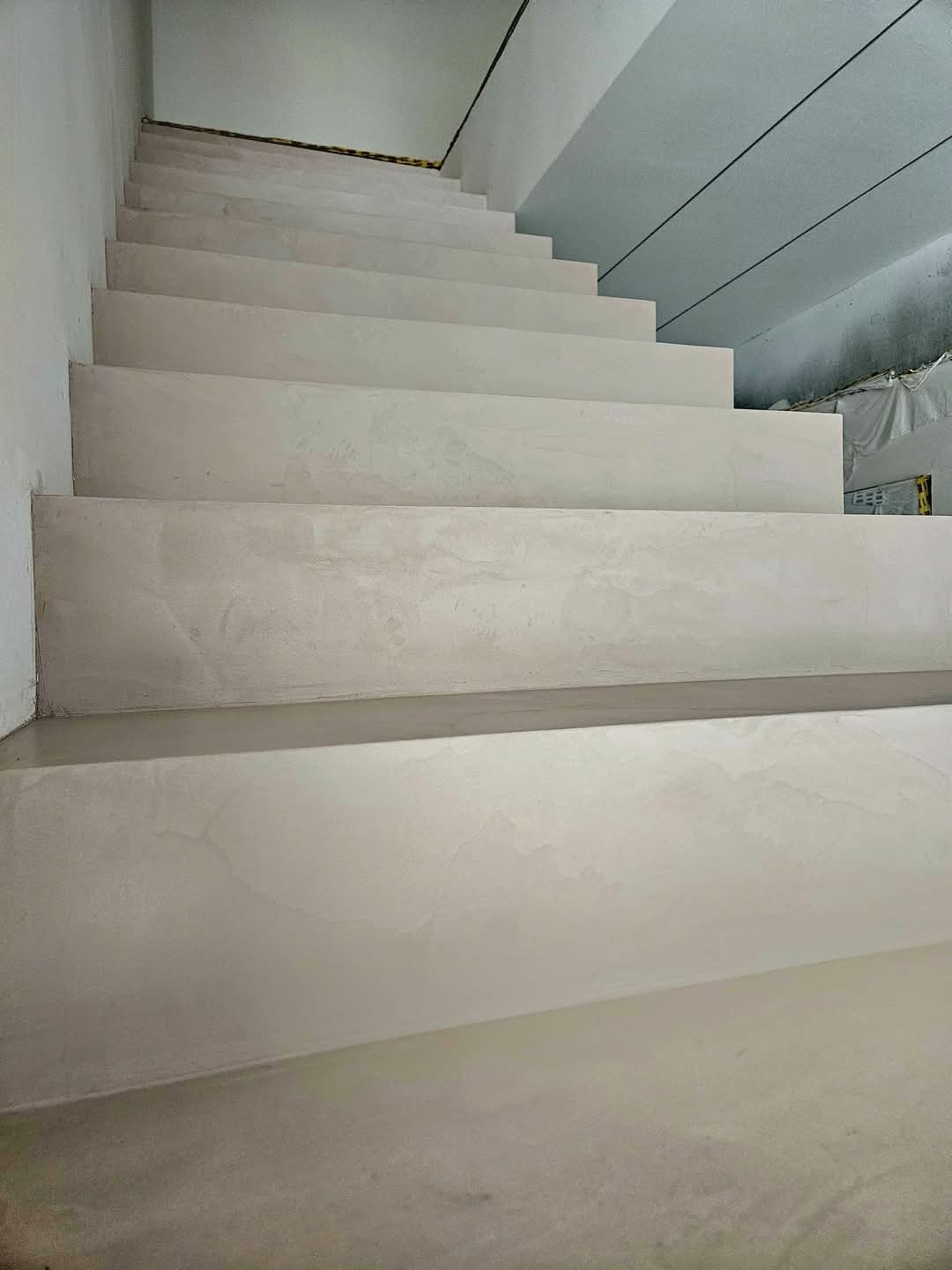
Most microcement floors that show wear faster than they should are floors that have been cleaned wrong, not floors that have been used hard. The care routine is straightforward — but it matters.
Daily care
- Vacuum or sweep grit before it gets walked across the surface — grit on the sealer is what causes micro-scratches over time.
- Damp-mop with a microfibre flat mop and a few drops of pH-neutral floor cleaner.
- Don't soak the floor — microcement doesn't mind a wet wipe, but standing water under furniture isn't ideal.
What not to use
- Bleach, ammonia, citrus cleaners or vinegar — they break down the polyurethane sealer over time.
- Abrasive sponges, steel wool or scouring pads.
- Steam mops — the heat can soften the sealer.
- Wax-based 'restorer' products — they leave a film that catches dirt and dulls the finish.
Spills and marks
- Wine, coffee, juice — wipe immediately; the sealer will handle it.
- Cooking oil — wipe with warm water and a drop of washing-up liquid.
- Black scuff marks from rubber soles — a soft white eraser usually lifts them; if not, a damp microfibre with a tiny amount of neutral cleaner.
- Hair dye, beetroot, turmeric — wipe immediately, they can stain even sealed microcement if left.
Yearly care
- Check high-traffic zones (kitchen island, doorway thresholds) for any sealer dulling.
- Touch-up with a single coat of the same sealer if needed — usually a 1-hour job per room.
Every 5–7 years
Plan a full re-seal of any floor in daily use. We come back, clean the floor properly, lightly key the surface and apply two fresh coats of polyurethane sealer. Half a day per room, and the floor reads as new.
If something does damage the surface
Heavy dropped tools, dragged appliance feet, or extreme localised heat can chip through to the base coat. These can be repaired — colour-matched, blended, re-sealed — without redoing the floor. Send us a photo and we'll quote.