
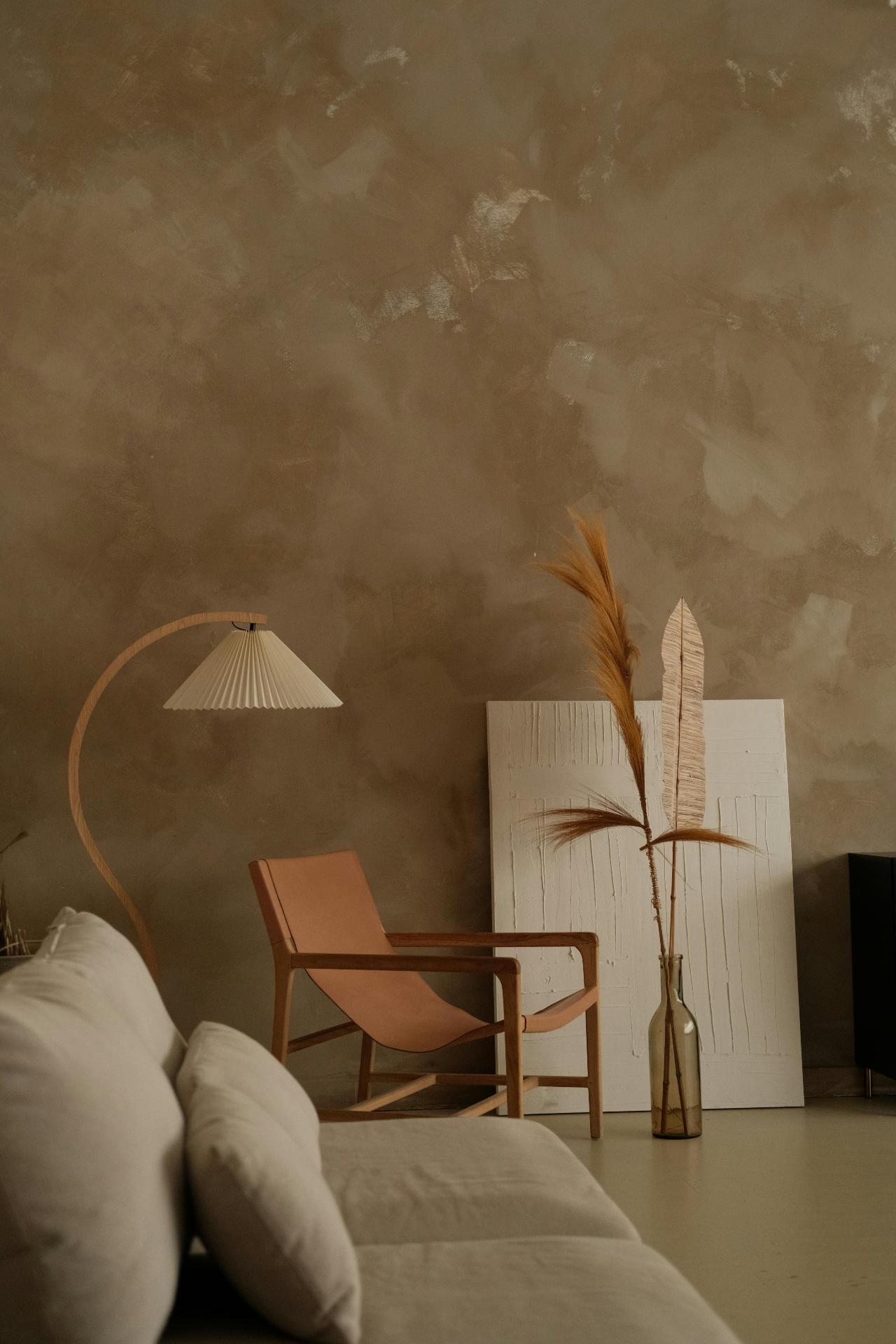
Exterior limewash is one of the most rewarding finishes there is. It ages the way a building should age — picking up its own weather pattern, softening into the brick or stone underneath, never looking like coating sat on top of a wall.
But limewash outdoors only works on substrates that can breathe. Get this part wrong and the failure mode is fast and ugly.
Substrates that work
- Lime render (NHL 3.5 or NHL 5) — the canonical substrate. Limewash bonds chemically as the lime carbonates.
- Soft, porous brick — Victorian London stock, old hand-made bricks, soft sandstone.
- Soft limestone and Cotswold stone — limewash develops a beautiful, slow patina here.
- Existing limewashed surfaces — these are the easiest to re-coat: brush down, dampen, re-apply.
Substrates that don't
- Cement render — limewash won't bond. It flakes off within a winter.
- Modern fired engineering brick — too dense and non-porous for the lime to key into.
- Painted walls (acrylic or masonry paint) — the existing coating blocks the wash from contacting the substrate.
- Plastic-paint-coated render systems — same issue; limewash sits on top and sheets off.
How exterior limewash ages
On a south wall, limewash gradually bleaches and softens — the wash thins where rain runs and stays denser where it doesn't, creating the streaked, soft-edged patina people associate with Italian and Cornish vernacular buildings. On a north wall it stays denser and a fraction cooler. Both are correct; neither is failure.
Maintenance cycle
Expect to re-coat exterior limewash every 5–8 years on a south-facing wall, 8–12 years on north or sheltered elevations. Re-coating is the easiest part of the system: brush down loose material, dampen the wall, apply two thin coats. No primer, no sanding.
Specifying for British weather
- Apply between 8°C and 18°C, never with rain forecast in the next 24 hours.
- Three to four thin coats — never one thick one. Each coat must carbonate before the next.
- Use limewash with a small percentage of natural pozzolan for additional weather-resistance on exposed elevations.
- Avoid silicone water-repellent treatments on top — they trap moisture under the wash.