
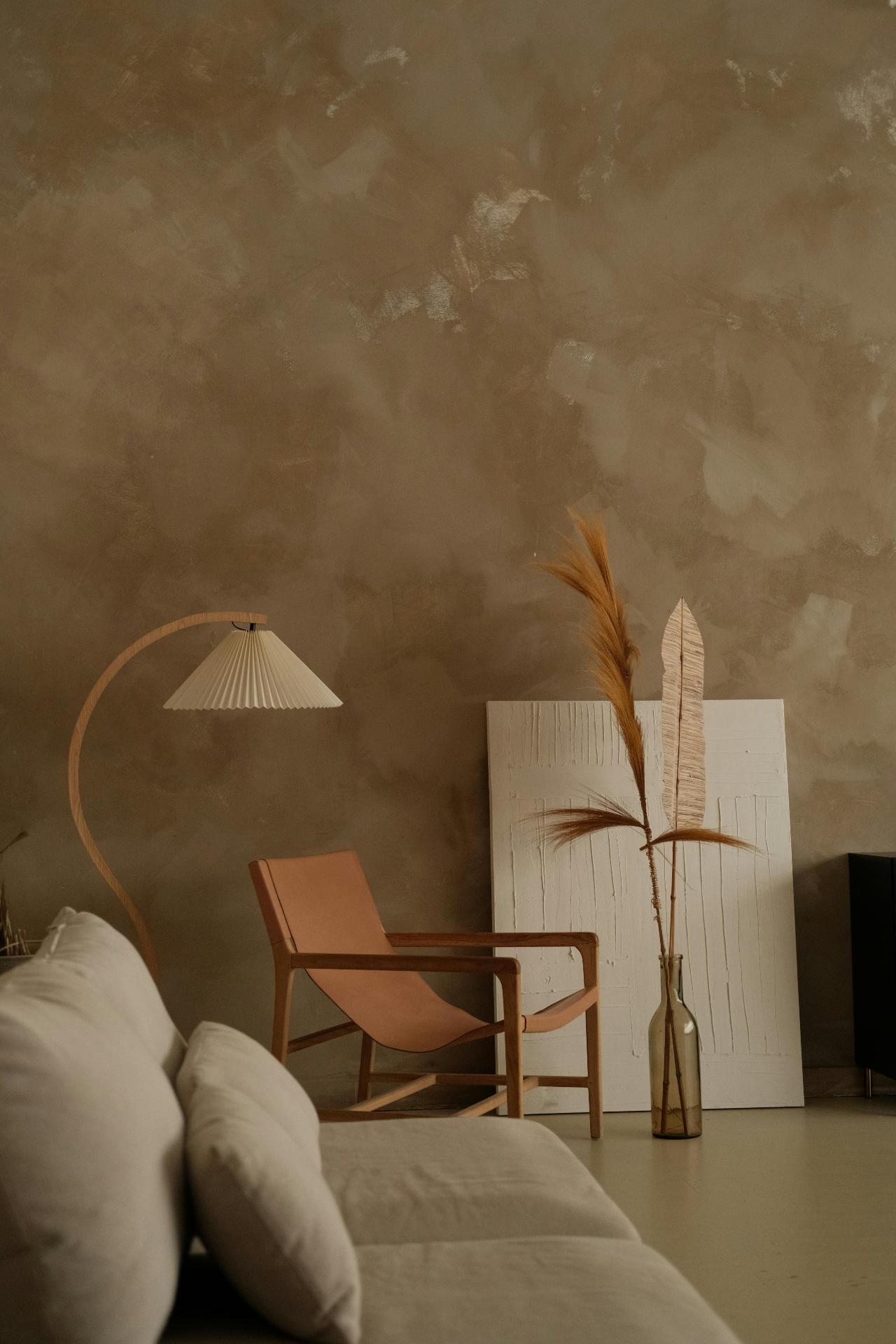
Victorian terraces don't suit modern paint systems particularly well. The walls were built to breathe — lime plaster on lath, often with damp paths the original builders just lived with — and sealing them up with vinyl emulsion is what causes the patches of blown plaster you see in most renovations.
Limewash and microcement, used in the right rooms, sidestep the whole problem.
Limewash on the principal rooms
In the front parlour, dining room and bedrooms, the original lime plaster is usually still there under three generations of emulsion. Stripping back to the bare lime and finishing in limewash gives the wall back its vapour permeability and gives the room the slightly cloudy, hand-finished surface that suits the period.
- Strip existing emulsion mechanically (steam, not chemical strippers — chemicals soak into lime plaster and cause efflorescence later).
- Make good with hot-mix lime, not gypsum filler.
- Three to four coats of limewash, each thin, allowing 24 hours between coats.
- Final colour develops over the next 2–4 weeks as it carbonates.
Microcement in the bathroom and extension
The two parts of a Victorian terrace that aren't original lime plaster — the bathroom (usually a 1980s rebuild) and the rear extension (usually a 2000s side-return) — are exactly where microcement belongs. Both are modern build-ups, both have rigid substrates, and both benefit from the seamless, contemporary surface that throws the Victorian bones of the rest of the house into relief.
What to avoid
- Don't limewash over existing emulsion — it won't bond and will streak off in months.
- Don't microcement original timber floors — apply over a screed in the extension instead.
- Don't put a vapour-tight finish on a chimney-breast wall — the chimney is your natural moisture vent and sealing it traps damp.
- Don't strip lime plaster back to brick unnecessarily — you lose 150 years of patina and gain nothing acoustically.
Programme and order of works
Lime work comes last. We programme the microcement first (it can be installed while plastering is still drying elsewhere), then the limewash on original walls once everything else is sealed and the house is back to a stable internal humidity. Doing it the other way round contaminates the fresh limewash with construction dust.