
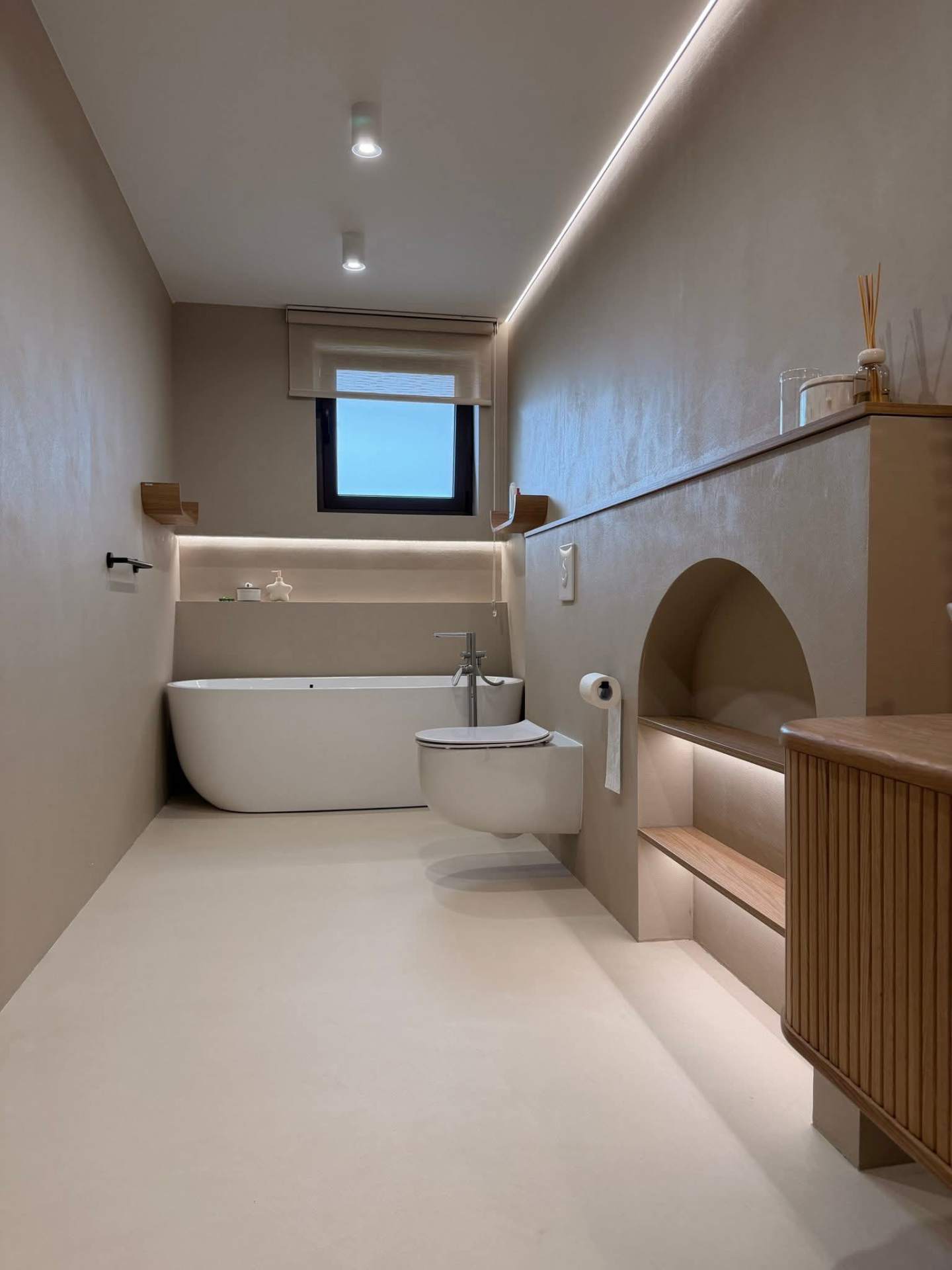
Acrylic Resin Floors
Seamless acrylic-resin and microcement resin floors — poured, troweled, sealed. Waterproof, hardwearing, no grout lines.
A seamless acrylic-resin floor gives you the look of poured concrete or polished stone without grout lines, cold joints or tile edges. We install acrylic-modified microcement resin floors — a two-component system that cures to a dense, waterproof surface only 2–3 mm thick, laid straight over your existing screed, tile or timber.
Why choose a resin floor
- Seamless finish — no grout, no joints, easy to clean.
- Only 2–3 mm thick — fits over existing floors without lifting doors.
- Waterproof once sealed — suitable for bathrooms, wet rooms and kitchens.
- Hardwearing — used in retail, hospitality and heavy-use residential.
- Underfloor-heating compatible.
- Fully tintable — any RAL, Pantone or bespoke shade.
How we install it
- 1Survey
We check your substrate — screed, tile, timber or existing resin — and confirm what prep is needed.
- 2Prime
Substrate is mechanically prepared and primed with a bonding coat suited to the base material.
- 3Base coats
Two structural coats of acrylic-resin microcement, reinforced with mesh at movement joints.
- 4Finish coats
Two thin decorative coats troweled and burnished to your chosen texture — smooth, cloudy or lightly rustic.
- 5Seal
Two coats of PU sealer, plus a matt or satin topcoat. Anti-slip aggregate optional for wet areas.
Ideal for kitchen-diners, bathrooms, wet rooms and open-plan living. A typical 30 m² area takes 4–5 days on site; usable at 24 hours, fully cured at 7 days.
Full RAL/Pantone tinting, sample boards on request, and specification sheets for your drawings pack.
Batched matching across multiple units, programmed to your fit-out schedule. Prices from £110/m² supply-and-install at scale.
Common questions
How is an acrylic resin floor different from epoxy?+
Epoxy is harder and more brittle — great for garages and workshops, less suited to living spaces because it can crack over movement joints and yellow in UV. Acrylic-modified microcement resin is slightly flexible, breathable, and holds colour under light. It's the finish most people mean when they ask for a 'polished concrete look' floor.
Is it slippery when wet?+
The standard sealed finish is R10 — fine for bathrooms with a bathmat, kitchens and living areas. For wet rooms, showers or commercial spaces we add fine anti-slip aggregate into the sealer to reach R11 or R12 without changing the look.
How much does a resin floor cost?+
Typically £110–£160 per m² supply-and-install for residential, depending on area, substrate condition and finish. We quote per project — send us a photo and a rough area.
Can it go over underfloor heating?+
Yes — the system is compatible with wet and electric UFH. The floor should be commissioned and stable before we start; we'll confirm the schedule at survey.
How do I look after it?+
Sweep, damp mop with pH-neutral cleaner. Avoid bleach and acidic descalers. Re-seal every 5–7 years in high-traffic areas — we offer this as a service.